
DLT, Zero Trust and AI-supported trust architecture for identity, interoperability and review-ready public services at national scale.
A reference architecture for trusted digital government: combining distributed ledger technology, Zero Trust access control and governed AI to deliver identity assurance, interoperability and auditability at national scale.
The project is relevant for governments and public institutions that need digital government architecture with stronger identity assurance, better interoperability and governance evidence that can withstand audit.
The platform treats trust as a system property rather than a policy statement, by centralising the trust functions that matter most: identity assurance, access control, transaction evidence and service accountability.
In a European government implementation context, this architecture model contributed to a transformational public-sector programme that improved service delivery, operational efficiency and institutional credibility.
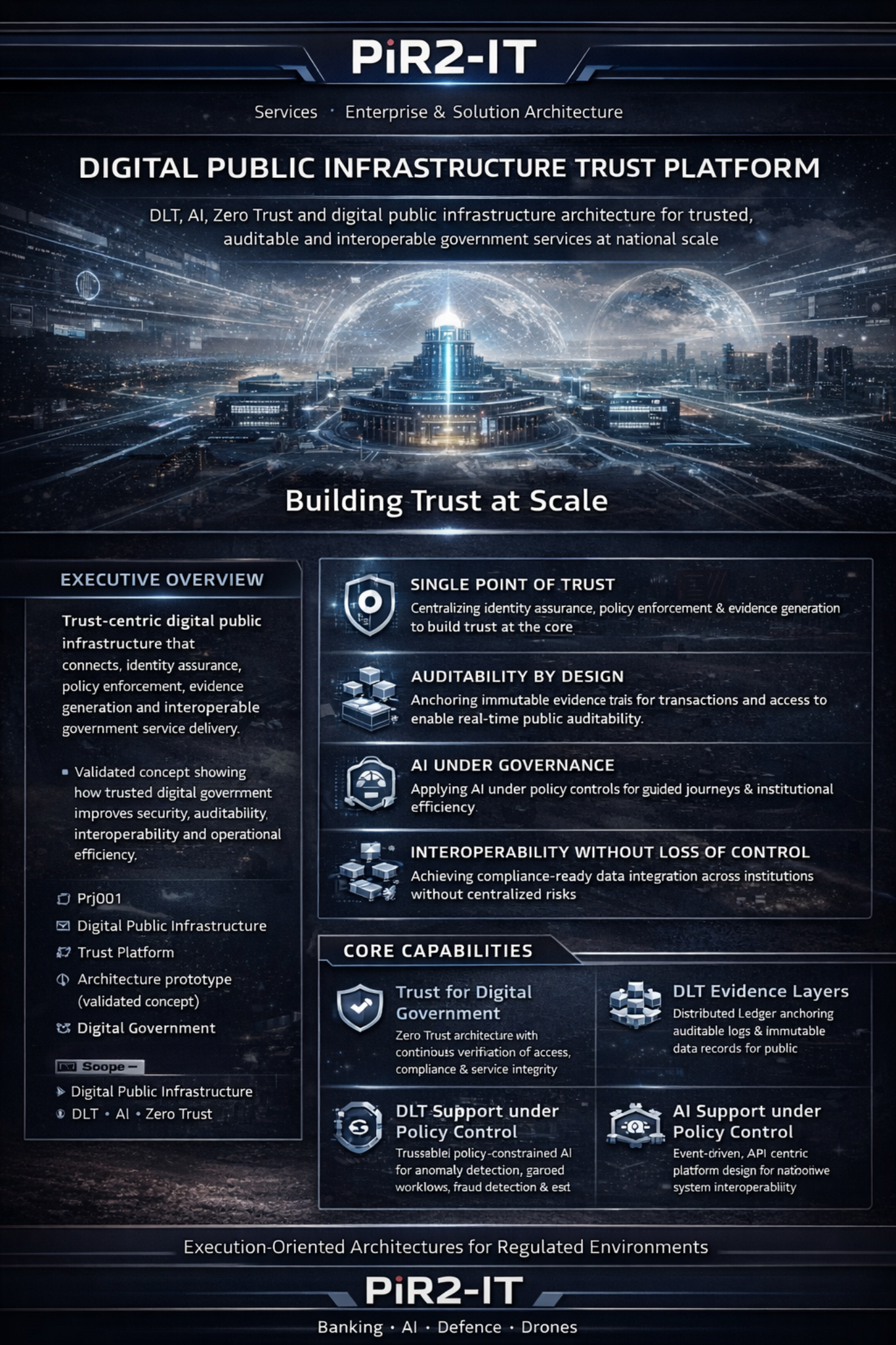
DLT anchors immutable evidence trails for transactions, access and decisions — enabling verifiable receipts, traceable service delivery and tamper-evident records.
Governance and evidence generation are embedded directly into the platform. Transparency is provable, not reconstructed after the fact.
AI is applied only where it reduces burden without undermining accountability — guided journeys, anomaly detection, case routing and policy-bounded automation.
Identity-centric access, continuous authorisation, least privilege and segmentation are applied as a programme-wide operating model, not a perimeter add-on.
In a European government implementation context, this architecture model contributed to a transformational public-sector programme improving service delivery, operational efficiency and institutional credibility across multiple institutions.
Discuss how this architecture or methodology applies to your programme, sector or challenge.
